Thursday, 9th October 2003
Today we did more comparisons between the Minitar AP performance against some SVEC APs. The test was conducted over the Node SebbyNet to Node GQ link. While using SVEC APs and 25dB parabolic antennas at both nodes, the link achieved a data through put of ~2.2mBits/sec (which is what a 5.5mBit link would achieve). The link is quite poor for such a short distance link due to the signal passing through a golf course which is full of really tall trees. When we swapped both SVEC APs to Minitar APs, we had no problems getting a data through put of over 5mBits/sec (which is what a 11mBit link would achieve). We then moved the Minitar AP at Node SebbyNet from the 25dB parabolic antenna to a 8dB superpass omni. We again achieved a data through put of over 5mBits/sec, where as the SVEC APs could not even establish a connection unless there was a 25dB parabolic at each end.
We now plan to swap all of the SVEC APs to Minitar APs as the Minitar APs give us better data through put over our links. Anyone who is interested in buying a SVEC AP please get in contact with me Sebastian Najnert.
Tuesday, 7th October 2003
A quick 14.4km link test to the Air-Stream-Pasadena Node from Node SebbyNet was conducted today. A 25dB parabolic 9m up from the ground was pointed from Node SebbyNet to a 8dB omni at Air-Stream-Pasadena Node. A quick site survey scan on the Minitar AP showed that it could pick up a signal from Air-Stream-Pasadena Node. A link was established and the antenna was orientated slightly better. A FTP transfer test achieved a constant data through put of ~100kBytes/sec and at times reached as high as 150kBytes/sec. Ping tests to Air-Stream-Pasadena Node and some of the other nodes connected to it had negligible packet loss.
Saturday, 13th September 2003
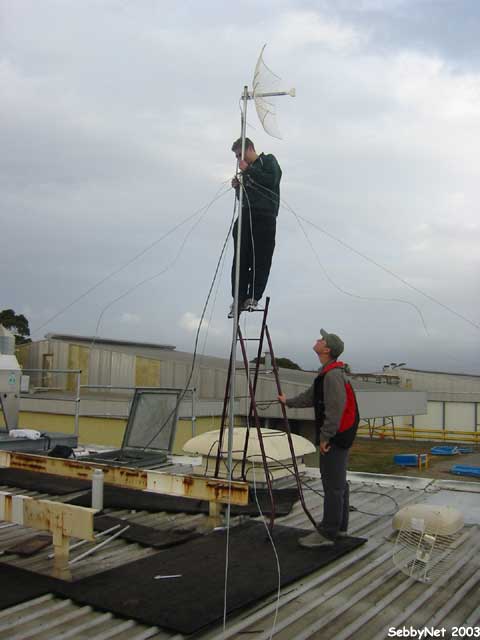
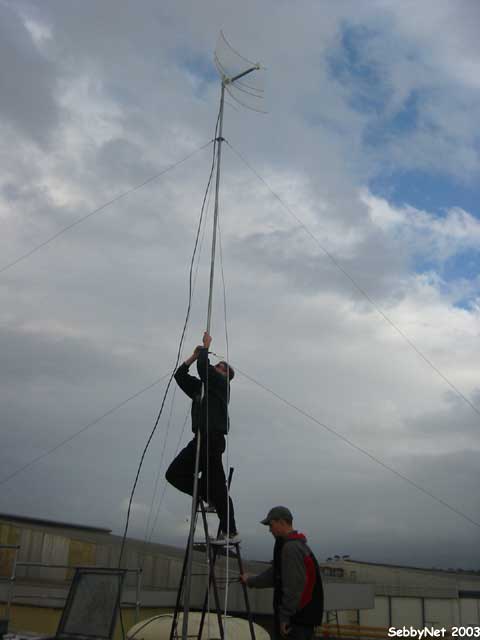
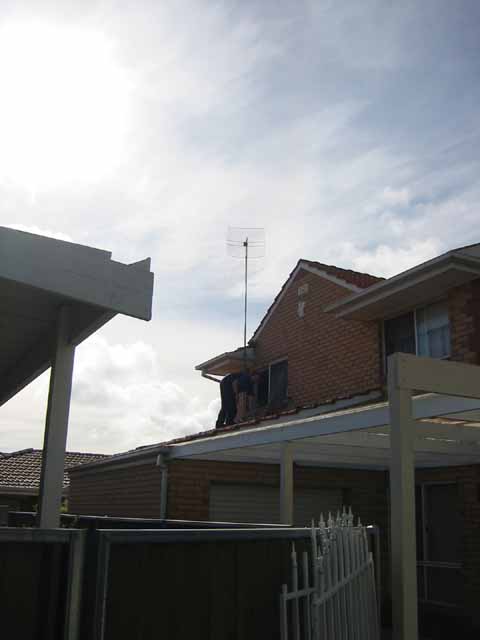
I had a quick visit at the end of today to see how the installation of the 6m mast at Air-Stream-Ridleyton Node had progressed. The guys were finishing off attaching a parabolic antenna and raising the mast when I arrived.
Monday, 25th August 2003
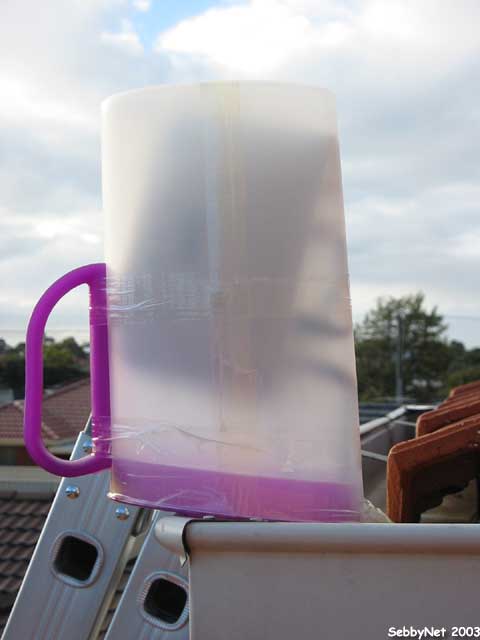
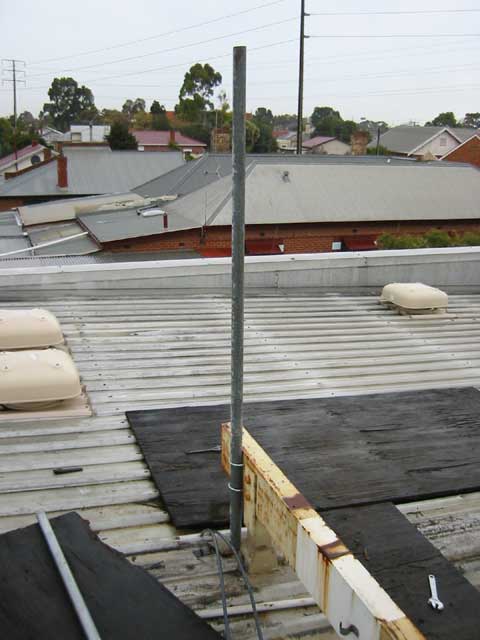
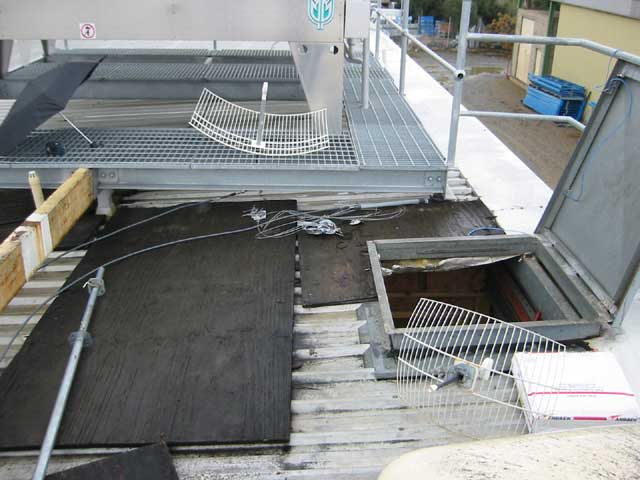
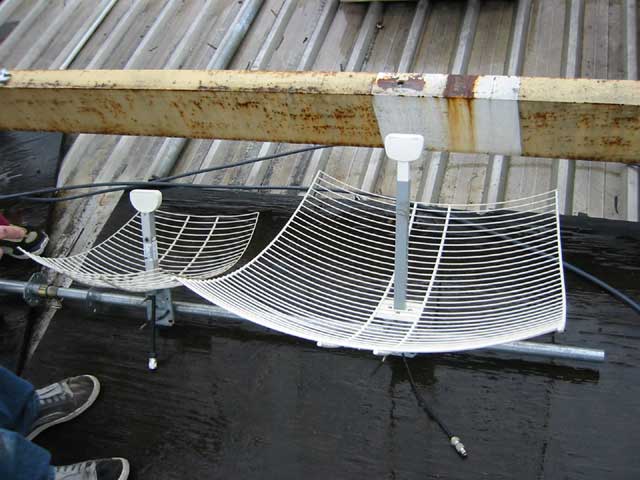
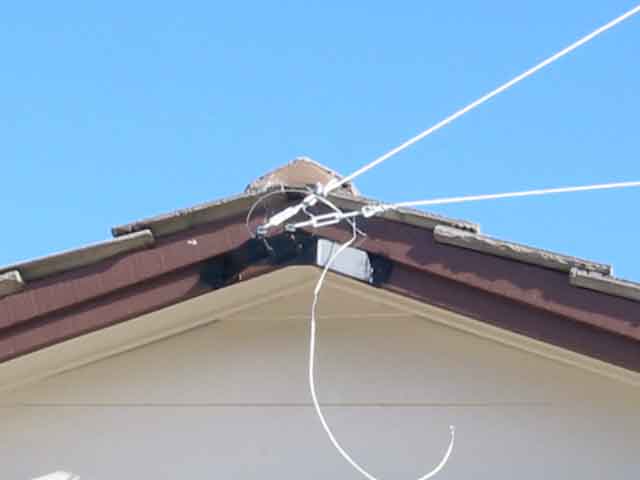
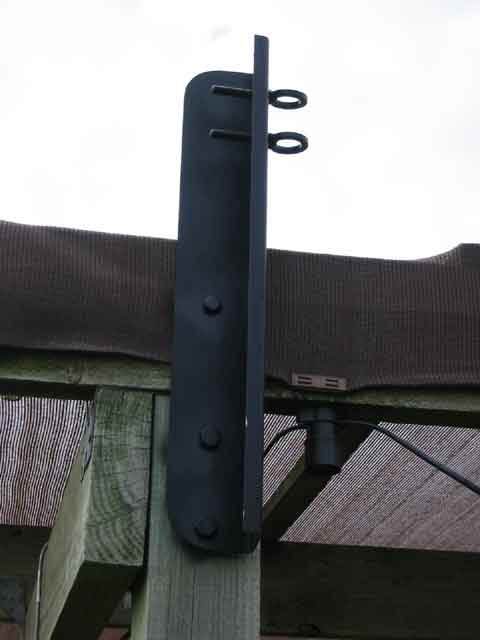
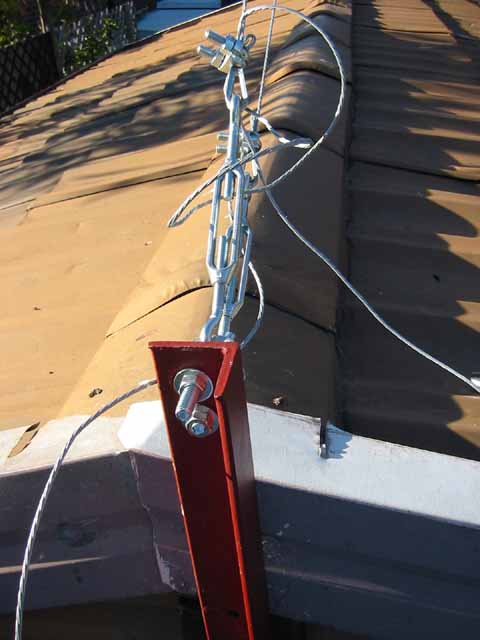
The SVEC AP at Node GQ had locked up and we were unable to use the SNMP manager to change settings on the AP. We tried power cycling the AP, but that had no affect. Therefore we had to take the AP down from the mast and use a USB cable to re-set the AP to it's default settings. This fixed the issue. Node GQ has chosen to use an interesting method to protect the AP while up on the mast.
Saturday, 23rd August 2003
Today I had the opportunity to meet up with some of the South Australian Air-Stream wireless members to work on the Air-Stream-Ridleyton Node. I provided some wireless gear (Orinoco PCMCIA card, connectors, pigtail, etc...) which was required to mount a second parabolic antenna at Air-Stream-Ridleyton Node which was planed to be used as a second backbone link to the Air-Stream-Skye Node. It was great to finally meet up and have a good look at the workings of another node. Unfortunately the weather was appalling throughout the day and hampered our efforts, hence the job remained uncompleted and left the Air-Stream-Ridleyton Node off-line.
Tuesday, 19th August 2003
A 25dB parabolic antenna which was initially used at Node JulzNet to provide a link to Node GQ was transferred over to the mast at Node SebbyNet. As always, we were short on time and the difficult task of aiming two parabolic antennas from the one mast was not finished. Node GQ received a poor, but still usable signal to the 8dB omni at Node SebbyNet and hence the link was left operating like that. One of the 25dB parabolic antennas was left providing a link to Node JulzNet.
Friday, 15th August 2003
With the mast at Node SebbyNet now standing at around 9.5m above ground with guys wires holding the mast perfectly straight up we decided to re-try a 1.0km link test from Node SebbyNet to Node GQ. The antenna at Node SebbyNet was positioned using a compass. At Node GQnet stumbler was used to located any signals. The antenna was at 8.5m above ground. In no time we picked up a signal from Node SebbyNet and proceeded to line up the antenna in the best position. The best signal received by the two nodes was -80dB. The antenna at Node SebbyNet has yet to be aligned to the best position. The link we left operating using a SVEC access point at each node working in bridged mode.
Monday, 11th August 2003
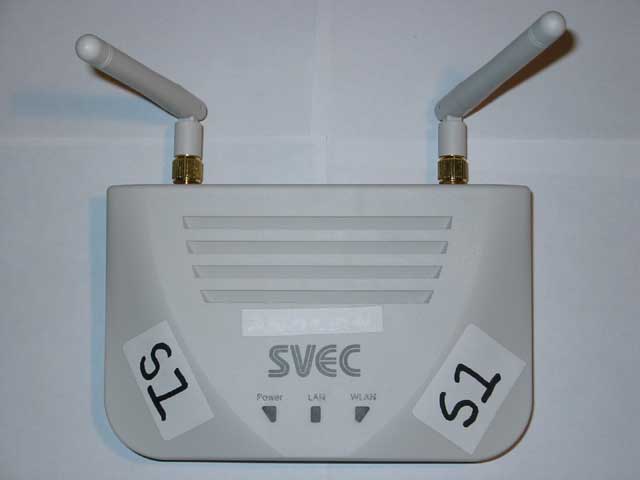
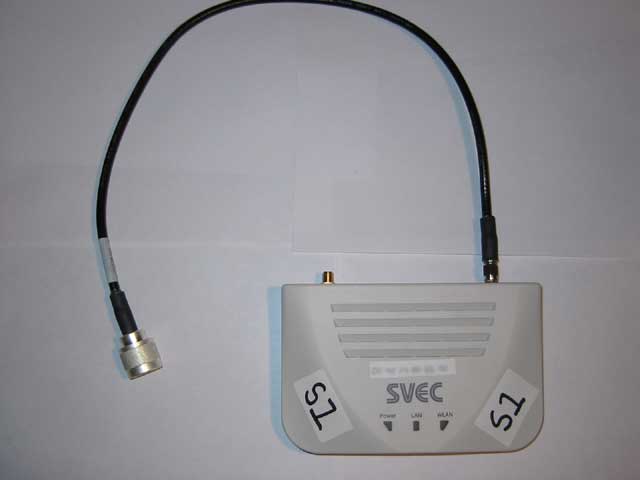
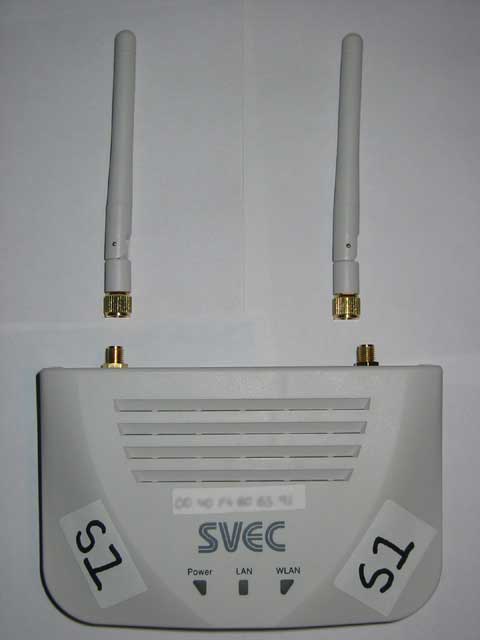
We received our order of three SVEC 11mbit access points today. One is for Node GQ and two are for Node SebbyNet. Initial tests show that these are great value for money access points.
Tuesday, 29 July 2003
The last task of aligning up the directional antenna at Node SebbyNet to point to Node JulzNet and tightening the guy wires was completed today. The signal received fromNode JulzNet is ~ -59dB and the signal received byNode JulzNet is ~ -64dB. The reason for Node SebbyNet receiving a stronger signal is that Node JulzNet is using a Senao 200mw PCMCIA card.
Monday, 28 July 2003
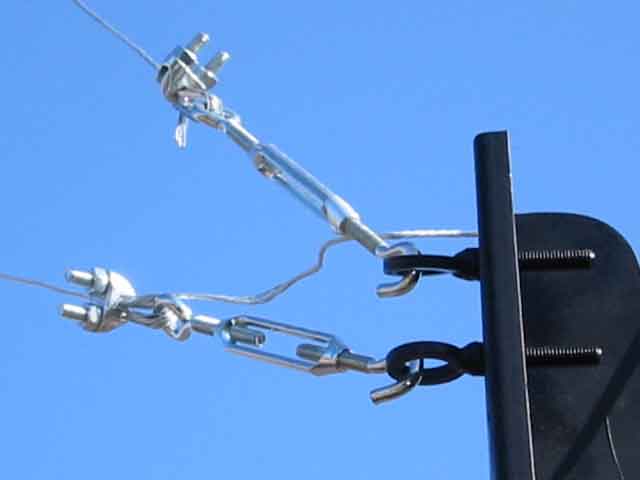
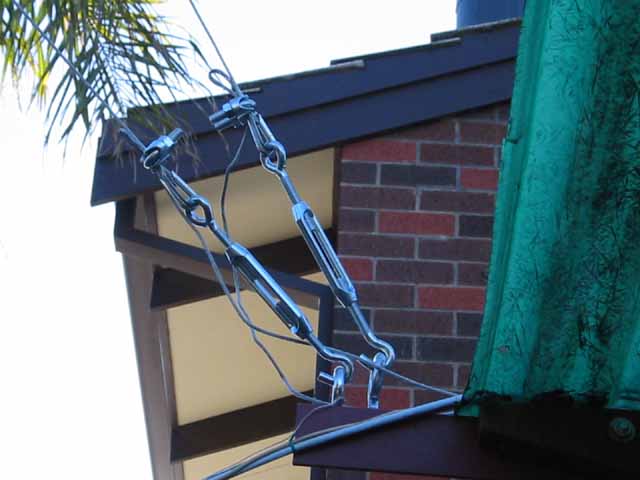
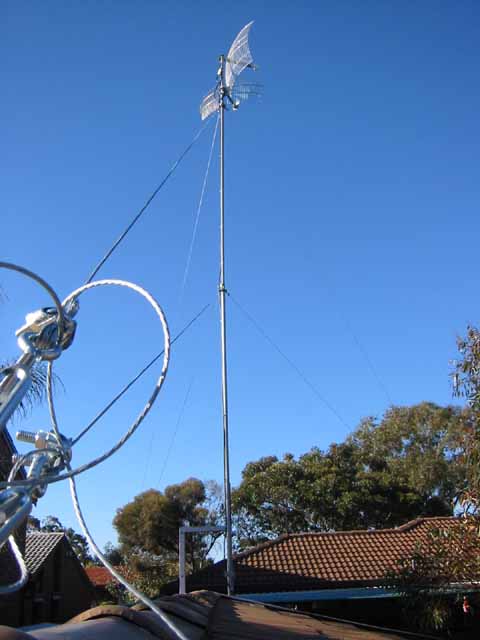
This morning the guy wires were attached to the antenna mast at Node SebbyNet today. There was no need for guy wires at the 3m point as there was a U-bolt holding the mast at ~2.5m where the mast passed through the roof. Also the 12m guy wires were not attached as the antenna cable is not long enough to reach up that height. We ran out of time and were unable to align the antenna and finish of tightening the guy wires.
Sunday, 27 July 2003
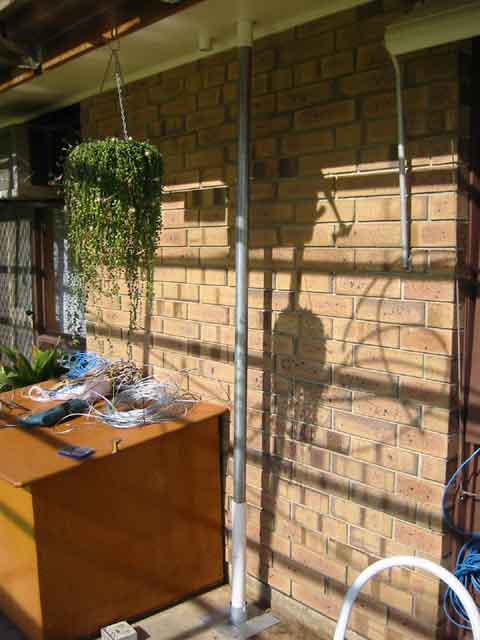
As was planed, work on installing the mast at Node SebbyNet went ahead today. The location chosen for mounting the antenna mast was on the pavement around the house as close as possible to the wall. This meant that the mast would go through the house roof, which was ok, since it would make it easier to work on the mast just by standing on the house roof.
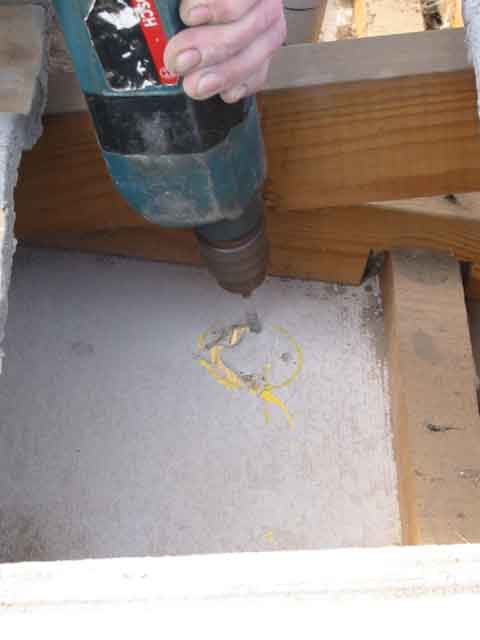
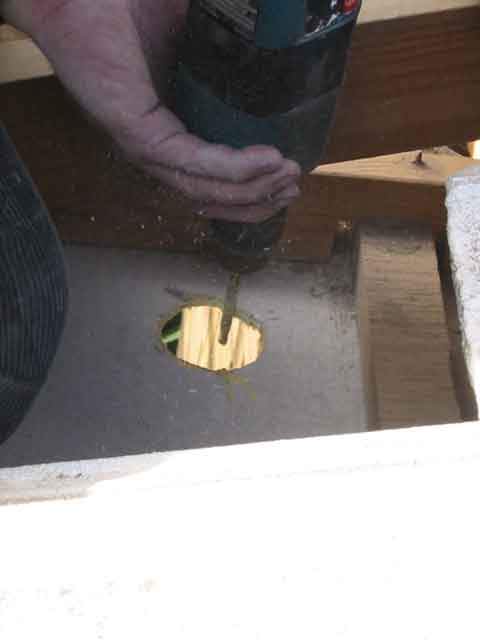
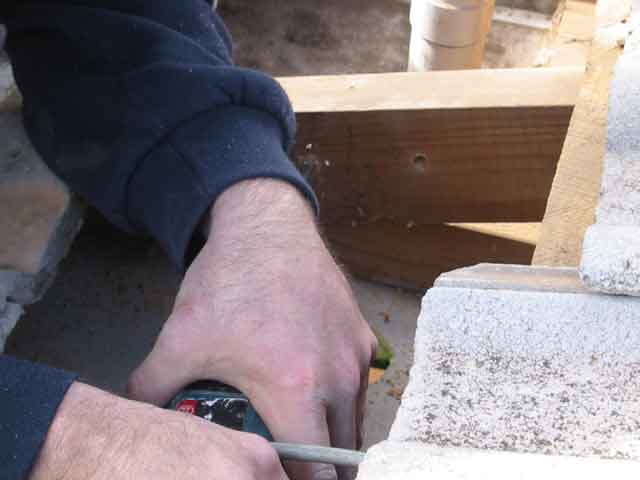
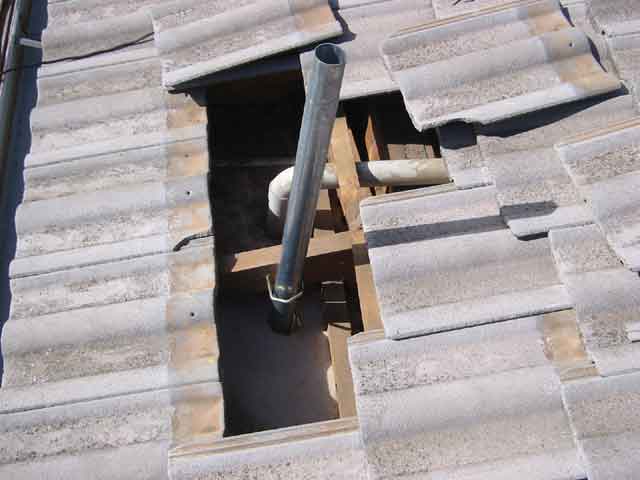
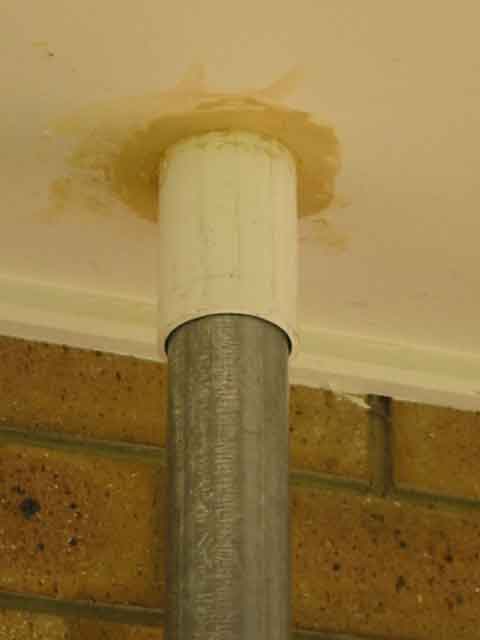
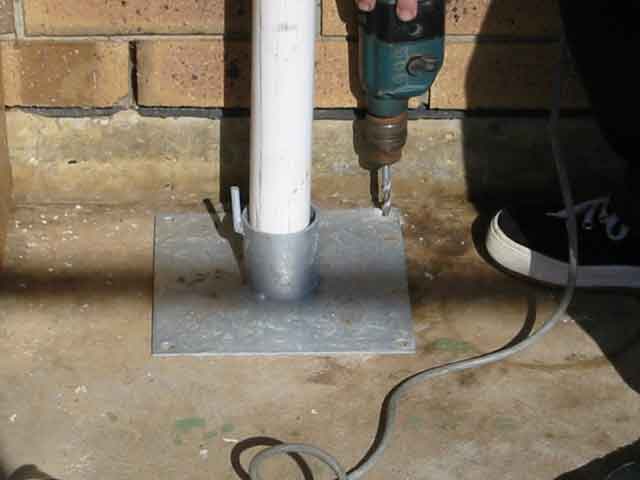
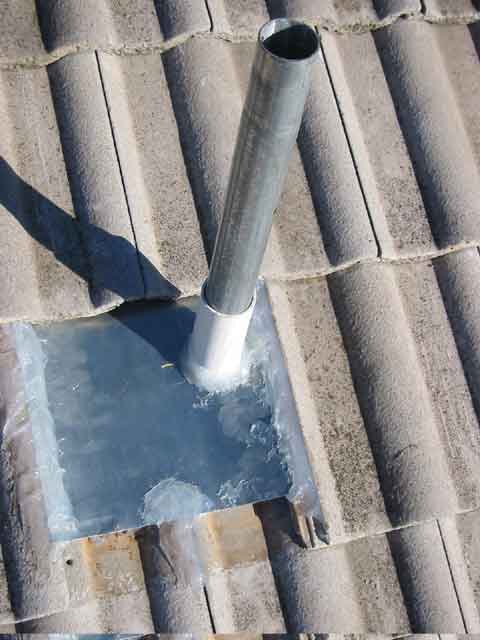
The first task was to bolt all four of the brackets to the guy wire tie down locations. Next step was to make a hole in the roof to allow the mast to pass through. The hole was made close to a beam inside the roof so that the mast could be securely held. In order to allow the mast to be rotated so that antennas could be aligned. A short length of PVC pipe was put through the roof. The inner diameter of the PVC pipe was just big enough for the bottom (most biggest section) of the mast to sit snugly inside. The missing roof tile was replaced with a sheet of metal and everything was sealed up with silicon. If any water does get into the PVC pipe, it will just get channelled through it and onto the pavement below.
The antenna mast will be setup in the new and ready mounting point with guy wires some time this week.
Friday, 25 July 2003
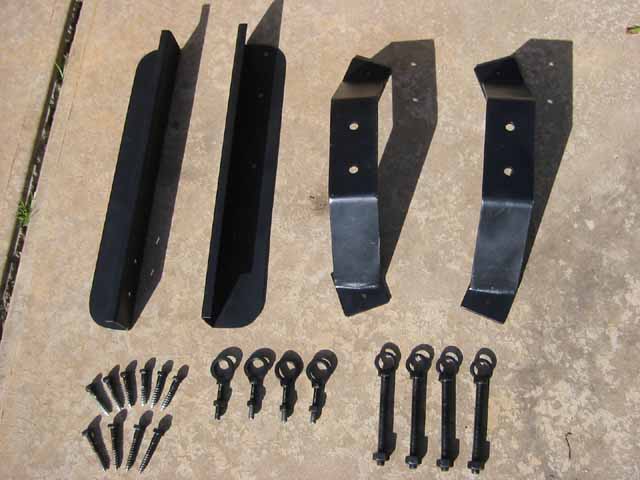
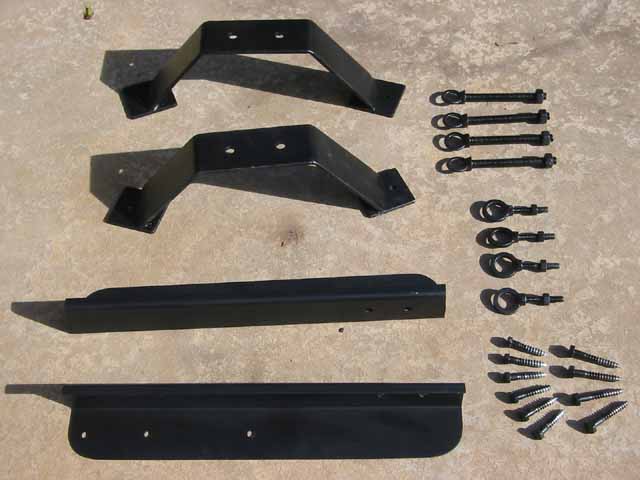
As of today I have all my custom made brackets completed. The brackets will be used at Node SebbyNet to secure four guy wires from the antenna mast to various points in order to add stability to the antenna mast when it is raised to 9m or even 12m. Two of the guy wires will be attached to the house and the other two will be attached to a pergola. Initially only three guy wires were planed to be used, but it was hard to find three points evenly spaced around the antenna mast.
Sunday, 20 July 2003
Today we secured the antenna mast at Node JulzNet in it's permanent mounting point with guy wires. The mast is 6m tall and is mounted ~2.5m above ground giving it a maximum height of 8.5m. Node JulzNet is at sea level according to NodeDB. Currently there are two 25dB parabolic antennas located at Node JulzNet both of which are connected to the same Senao 200mw PCMCIA card with the use of a 3-way antenna splitter. One of the directional antennas links to Node SebbyNet and the other links to Node GQ.
Thursday, 17 July 2003
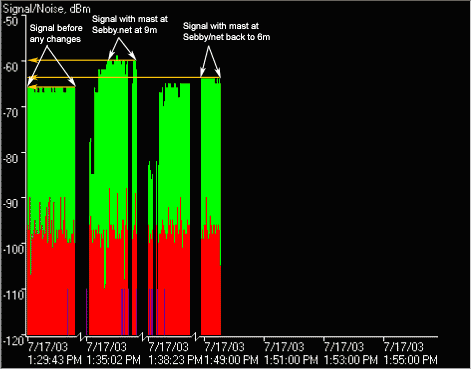
A quick experiment was performed today to see the difference in link strength (if any) was obtained by changing the antenna mast height at Node SebbyNet. Initially the mast was at 6m and a signal strength was ~66dB was obtained from Node JulzNet. The mast was then raised to a height of 9m. At 9m a signal strength of ~60dB was obtained. The mast was then lowered back to 6m as no guy wires have yet been attached.
Some things to note are that Node JulzNet is at sea level and had the antenna mast raised to ~7.5m. Node SebbyNet is 2m above sea level. Therefore even tho Node SebbyNet had the antenna raised ~3.5m above the antenna at Node JulzNet, a much stronger signal was obtained then when the antenna mast at Node SebbyNet was at almost the exact same height as the antenna mast at Node JulzNet. It is assumed that the beam width of the antenna would have covered the small difference in height and hence a better signal was obtained as a muhc clearer line of sight was available.
Thursday, 10 July 2003
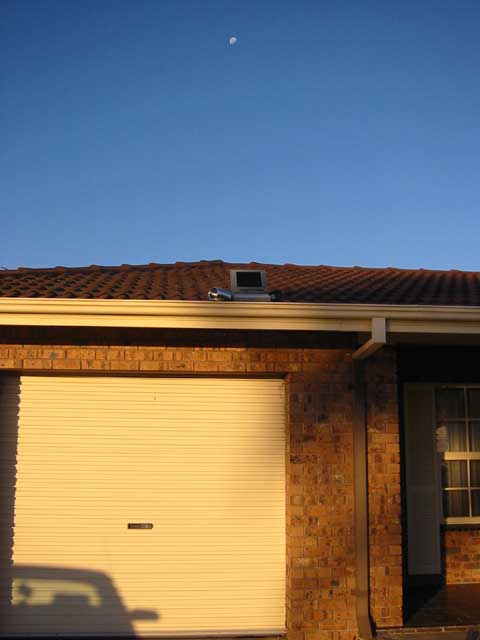
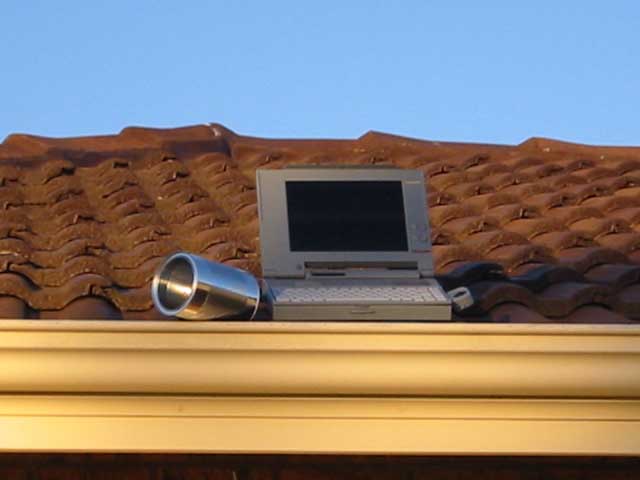
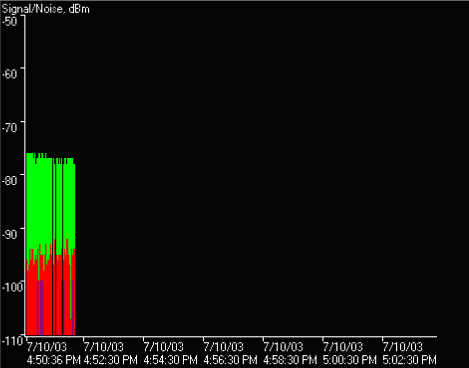
Today a second link test was conducted from Node Meekys to Node SebbyNet. The aim of this test was to find suitable spots for mounting an antenna at Meekys and checking if a link was possible at the proposed positions. Mounting a cantenna to the gutter looked to be one of the easiest approaches to take. A cantenna sitting on the gutter at Meekys obtained a steady -77dB signal to an 8dB omni 9m up at Sebby.net.
Wednesday, 9 July 2003
Most of today was spent conducting link tests from Node GQ to both Node SebbyNet and Node JulzNet. We have always intended on having a link between Node GQ and Node SebbyNet, but this link proved to be very difficult to establish. The 1km between Node GQ and Node SebbyNet has nothing but a golf course in it and hence lots of trees. Node SebbyNet had a 25dB parabolic antenna mounted 9m up and Node GQ also had a 25dB parabolic antenna which was trailed at ~7m and ~11.5m. At the 11.5m a signal to Node SebbyNet was picked up occasionally.
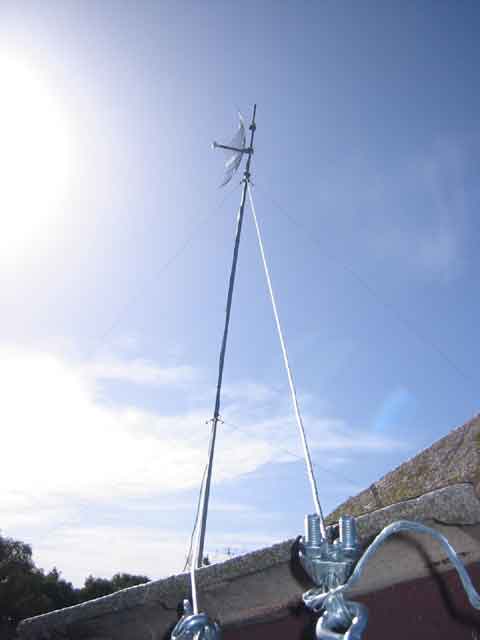
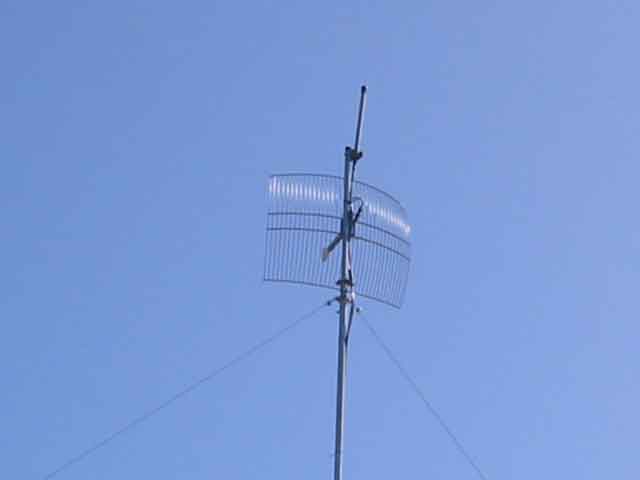
After hours of mucking around with no luck, we moved onto trying a link test between Node GQ and Node JulzNet. This worked perfectly with the parabolic at Node GQ at only 7.5m (as shown in the photo below).
As of today Node GQ is now permanently connected to our WAN.
Monday, 7 July 2003
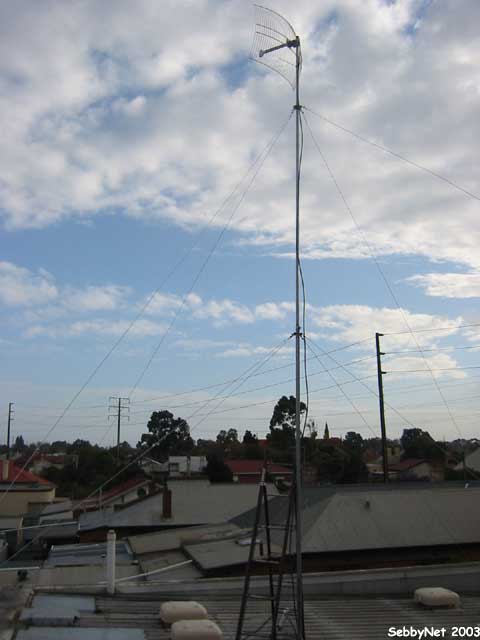
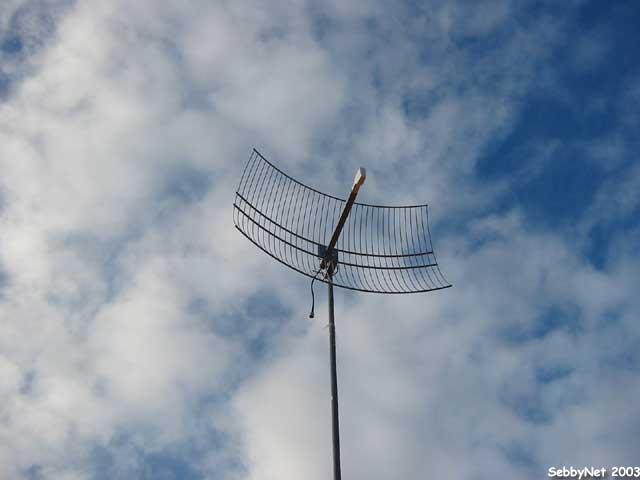
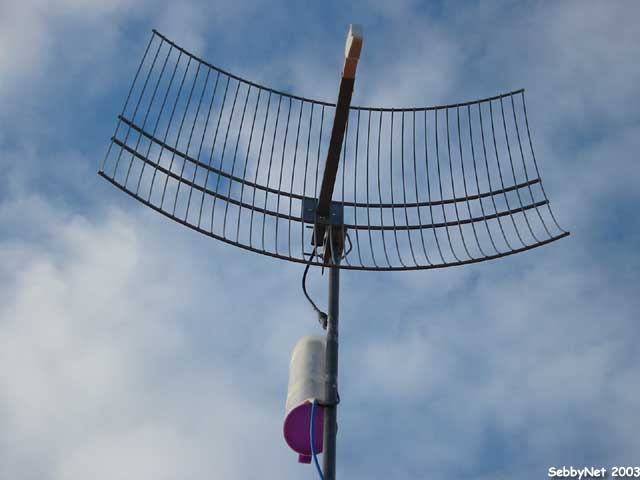
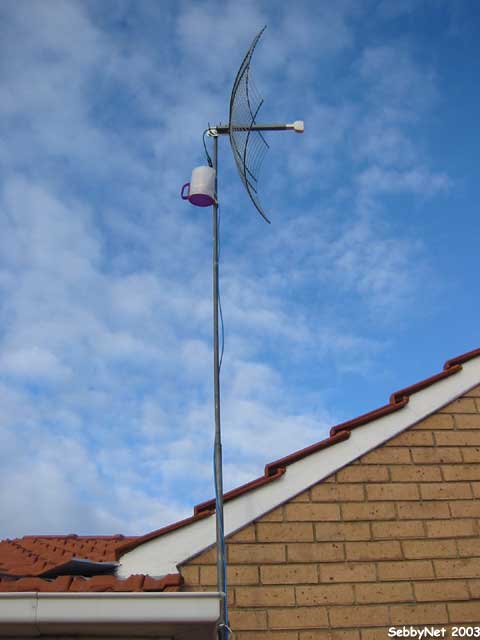
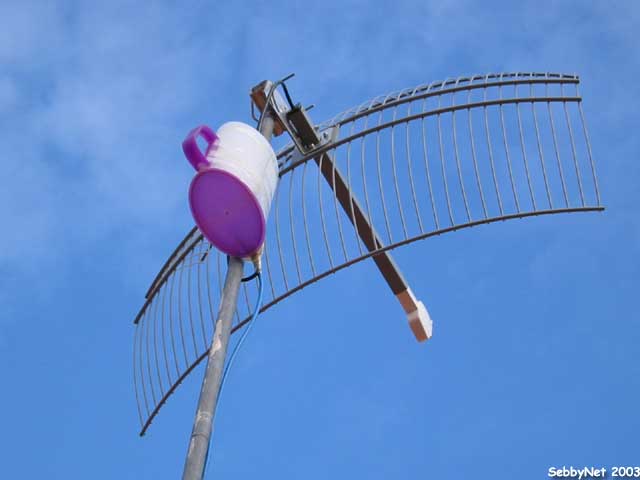
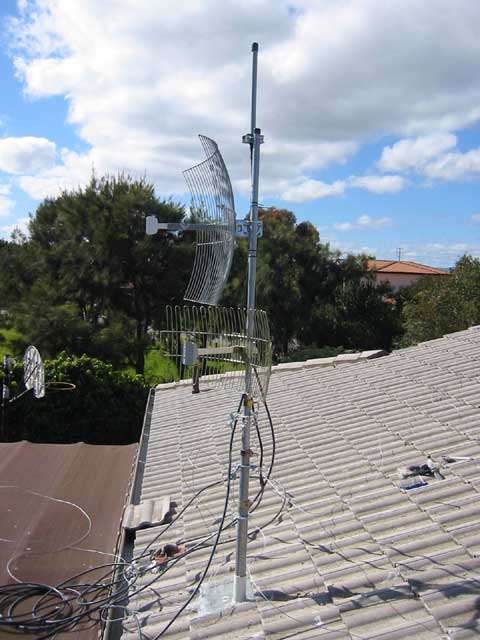
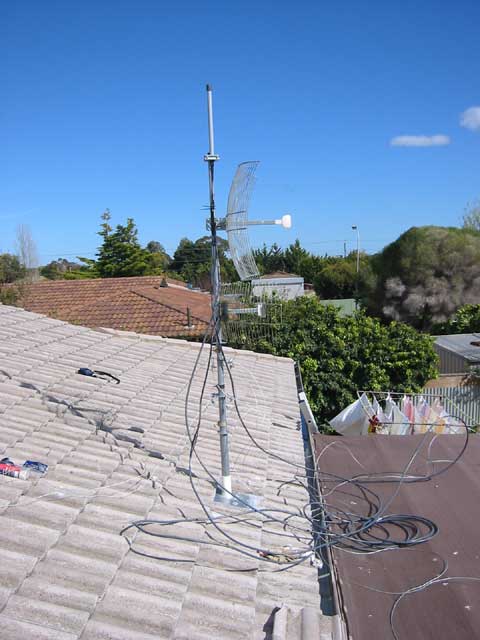
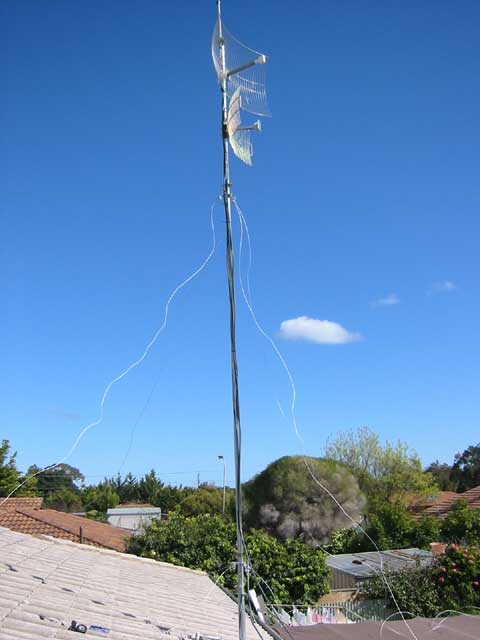
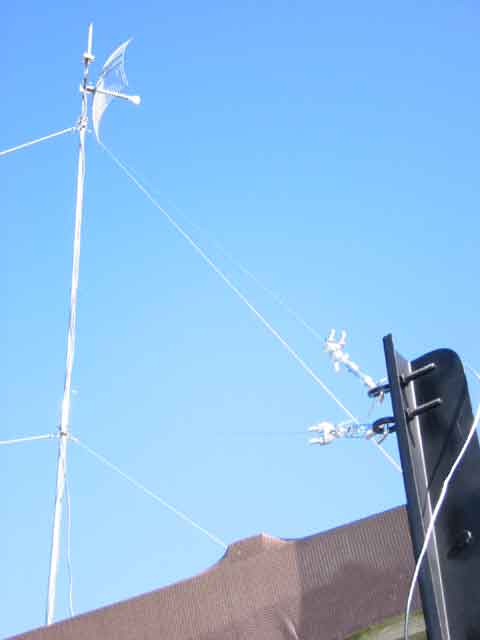
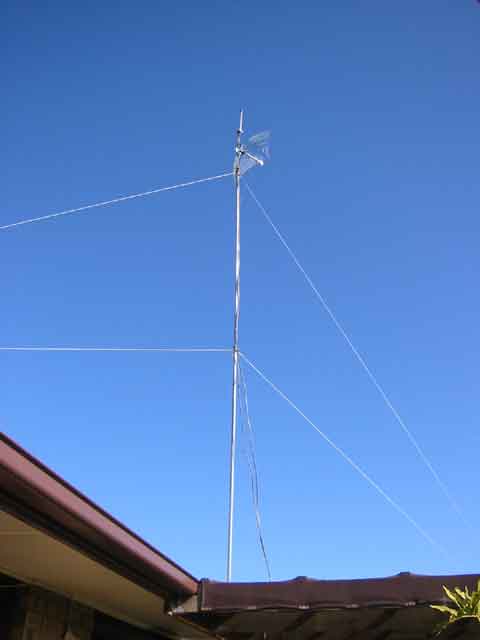
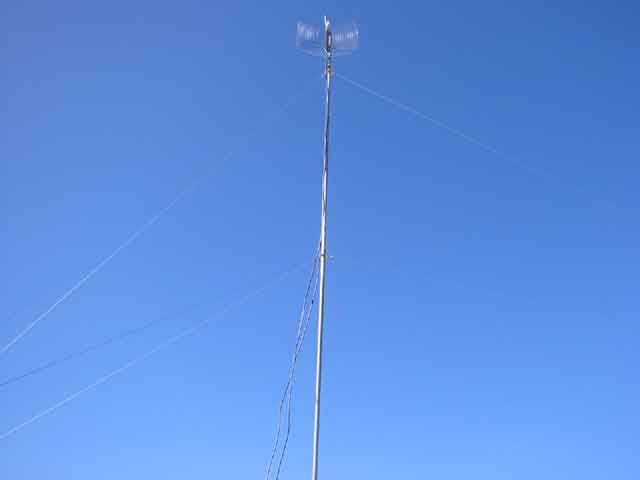
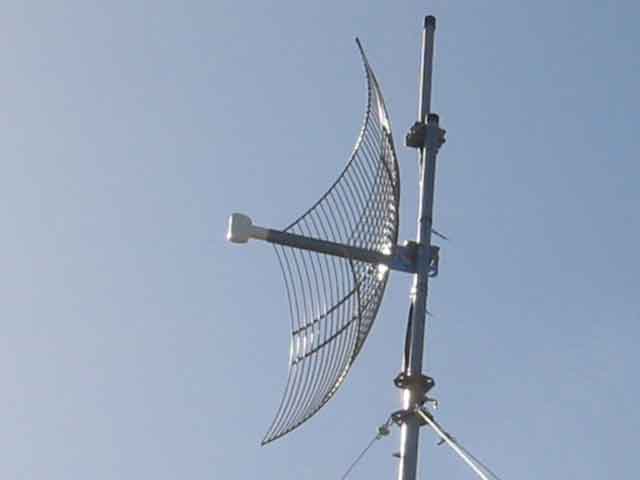
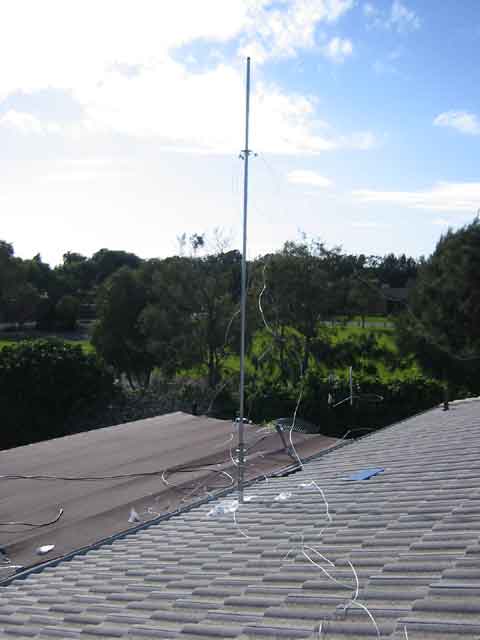
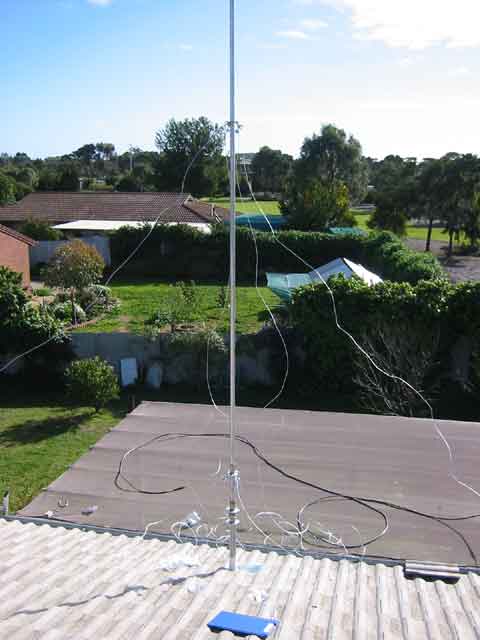
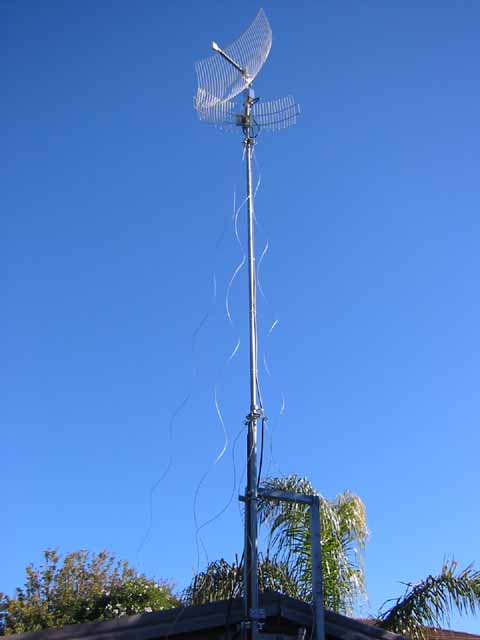
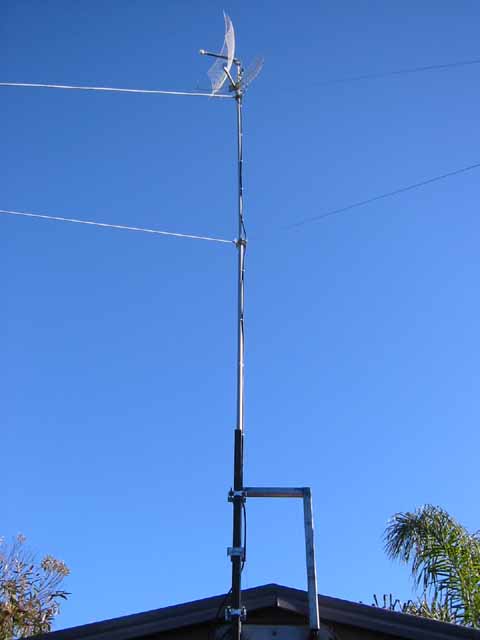
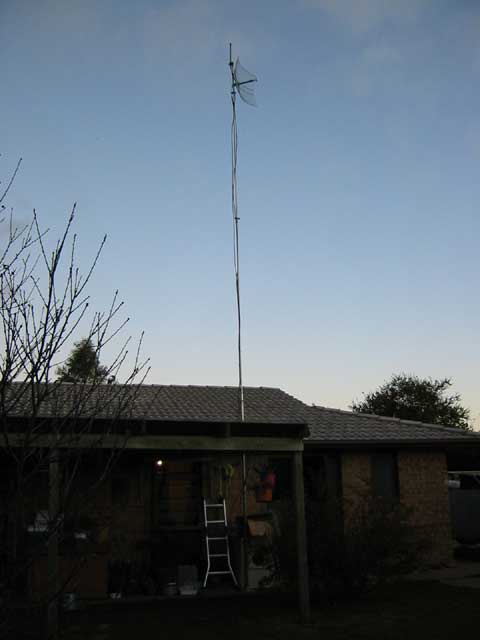
A new 12m antenna mast has been purchased and will be installed at Node SebbyNet as well as a 25dB Hills parabolic antenna. Node GQ also purchased a 25dB Hills parabolic antenna. Due to the extreme height of the mast at Sebby.net will only be expanded to a maximum height of 9m until the guy wires are attached. The photo below is of the mast at Sebby.net extended up to 9m with a 25dB hills antenna and an 8dB omni mounted on top.
Monday, 9 June 2003
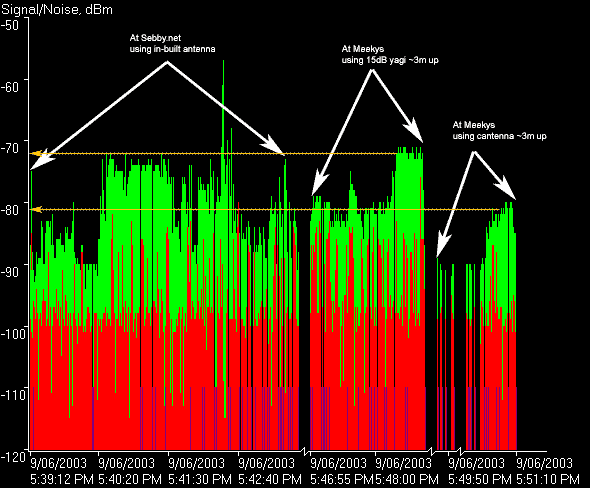
A second link test was done today between Node SebbyNet and Node Meekys. At Sebby.net we had a 8dB omni mounted ~7m up connected to a Orinoco GOLD PCMACIA card using a 9m length of EFX2-50 heliax (3/8'', 50 ohm) cable. At Meekys we had a 15dB Yagi antenna mounted on a length of wood and held up ~3m. This was also connected to a Orinoco GOLD PCMCIA card using a 9m length of EFX2-50 heliax (3/8'', 50 ohm) cable. With the Yagi we managed to get a steady signal strength of ~-72dB. We repeated the test using a cantenna. The cantenna achieved a steady signal strength of ~-81dB. However, it should be noted that we did not orientated the cantenna's position, hence the polarisation of the cantenna would have not been identical to the omni directional antenna. We hope to get an 5-10dB increase in signal strength when we mount the cantenna at node Meekys later this month.
Monday, 26 May 2003
Today a we spent time aligning antennas at Node JulzNet and Node SebbyNet so that we could get the best signal possible. We got around -77dB. The antennas were left in that position and we setup gateways to link the two nodes.
Sunday, 25 May 2003
More link testing today successfully got a link between Node SebbyNet and Node Meekys using a 25dB parabolic at one end and a home made cantenna at the other end. Signal was around -80dB at the test site while standing on the ground and between -65dB and -75dB while standing on the roof.
Friday, 23 May 2003
We did some link testing today and successfully got a link going between Node JulezNet and Node GQ using a 25dB parabolic mounted up ~8m at one end and a 15dB yagi mounted ~5m up at the other end. We also got a signal between Node JulzNet and Node SebbyNet using 25dB parabolic antennas at each end.
Friday, 16 May 2003
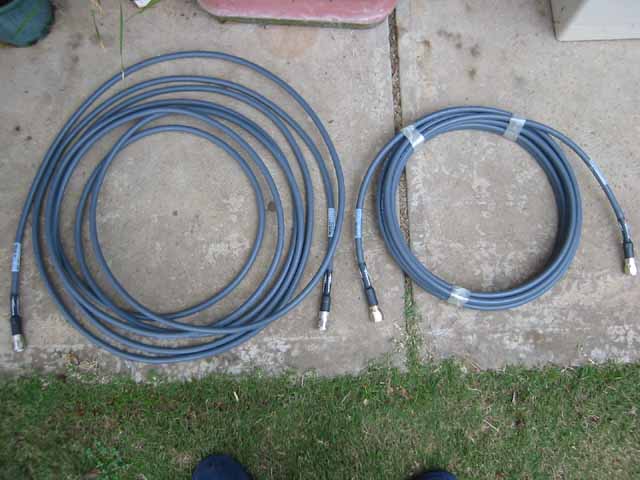
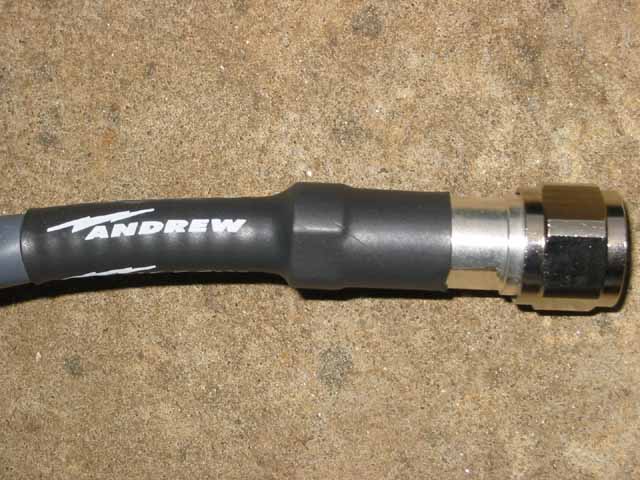
My two 9m lengths of EFX2-50 heliax (3/8'', 50 ohm) cable have had connectors put on them and returned to me :)
Saturday, 3 May 2003
I now have a fully operational router / gateway PC which routes traffic between my LAN and wireless clients. I'm still waiting for my antenna cable to have connectors put onto it...
Thursday, 1 May 2003
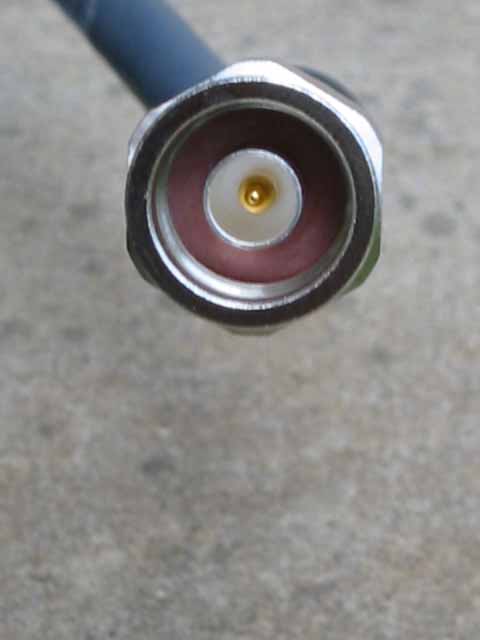
Today I received my Yagi antenna complete with a N connector put onto it..
Monday, 28 April 2003
I'm not if it really was still Sunday or not... but today (in the very early hours) I began this web page.
Sunday, 27 April 2003
Before the antenna started gathering dust I decided to work out where I might mount it. The far easiest and quickest place to mount it was on my basket ball ring poll. I found some 1m long wooden polls from what probably was a beach tent. The poll was a perfect thickness and fitted perfectly in the mounting clamps of the parabolic antenna. Since this was just something for fun I used two sets of linked cable ties to hold the wooden poll in place on top of the basket ball poll.
Saturday, 26 April 2003
Today I bought and have in my possession a 25dB Parabolic Grid antenna. From the web searching I have done over the years a 25dB antenna is probably the most powerful commercial antenna that is available. It is quite large, measuring approx 40x100cm and has a beam width of around 30deg. Also today I bought a 15dB Yagi antenna, which I will have later this coming week once a connector is put onto it's cable.
Tuesday, 15 April 2003
I've sourced out someone in Adelaide selling some EFX2-50 heliax (3/8'', 50 ohm) cable. Cable loss is ~20dB / 100m, or .2dB / metre which is apparently slight better than LMR-400 cable which has a loss of 2.2dB / metre. The source was selling the cable in 30ft packs, which included two male N-connectors, one of which was already fixed to the cable and the other not. I bought two 30ft packs for a total price of $71. Not wanting to screw up attaching the second N-connector, I passed the cable onto someone else who could do it for me.
Also today I picked up from the Adelaide Air-Port my parcel containing an Orinoco GOLD PCMCIA card.